


Feline Infectious Peritonitis (FIP) Information for cat owners
Feline Infectious Peritonitis (FIP) Information for cat owners
By Dr. Stephanie Sorrell, Prof. Séverine Tasker, Dr. Sam Taylor, Dr. Emi Barker, and Prof.Danielle Gunn-Moore
Over the last few years great progress has been made in the treatment of feline infectious peritonitis (FIP). This previously deadly disease can now be successfully managed. However, it remains a serious condition
and this document is written to help owners understand the available medications and how they are used to treat cats with FIP.
What is feline infectious peritonitis?
FIP is a severe disease in cats caused by feline coronavirus. COVID-19 is also caused by a coronavirus but the coronavirus causing FIP is not the same and only infects cats. Feline coronavirus is commonly found in the faeces of cats and research has shown that infection is very common among cats. Thankfully, in most, it causes mild diarrhoea or no signs at all. However, in a small number of cats, the virus changes (mutates) inside the cat, and interacts with the cat’s immune system in a certain way, resulting in FIP. Finding coronavirus In a cat doesn’t mean they have FIP, and it is not possible to consistently tell the difference between a coronavirus causing FIP, and one causing no signs of illness. Further tests must be performed by a veterinarian to diagnose FIP.
Which cats develop FIP?
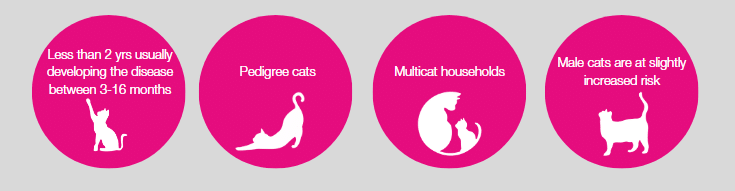
We do not know why certain cats develop FIP and others do not, but it is diagnosed more often in young cats under 2 years of age, pedigree cats and cats in multicat homes (eg homes with several cats, breeding environments, shelters). The disease is however also diagnosed in older cats and cats in single cat environments.
What signs do cats with FIP show?
Cats with FIP can show a variety of signs as the disease can affect any organ in the body. The most common signs are: Lethargy/tiredness; Eating less and losing weight; A high temperature

