



Bova Scholars
Welcome to our Bova Scholars hub. Here you will find all our CPD – all free, and all from experts in their field. We have a passion for innovation, and this not only extends to the products we deliver, but to the education and CPD we create. We aim to provide you with the latest research, thinking and treatment options with easily accessible blogs, podcasts and webinars. So, whether you’re a reader, a listener or a watcher, we have you covered.
-
Upcoming

Supportive medications: Sometimes you need a little help
From thunderstorms and car trips to vet visits, visitors at home or even just a walk to the park, situational stress can significantly impact a pet’s wellbeing. Many animals with mental illness struggle with everyday situations. In the long term, their baseline medications will help them, but what about now? Short acting, supportive medications can help them cope. Knowing how and when to use supportive medications can make all the difference.

-
Upcoming

Monitoring and adjusting behaviour treatment plans
You’ve diagnosed the case and started treatment—but how do you know the treatment is actually working? Behaviour cases rarely follow a straight line and knowing when to stay the course or make a change can be challenging. In this final session, our specialist veterinary behaviourists will guide you through how to effectively monitor progress and confidently adjust treatment plans.

-
Upcoming
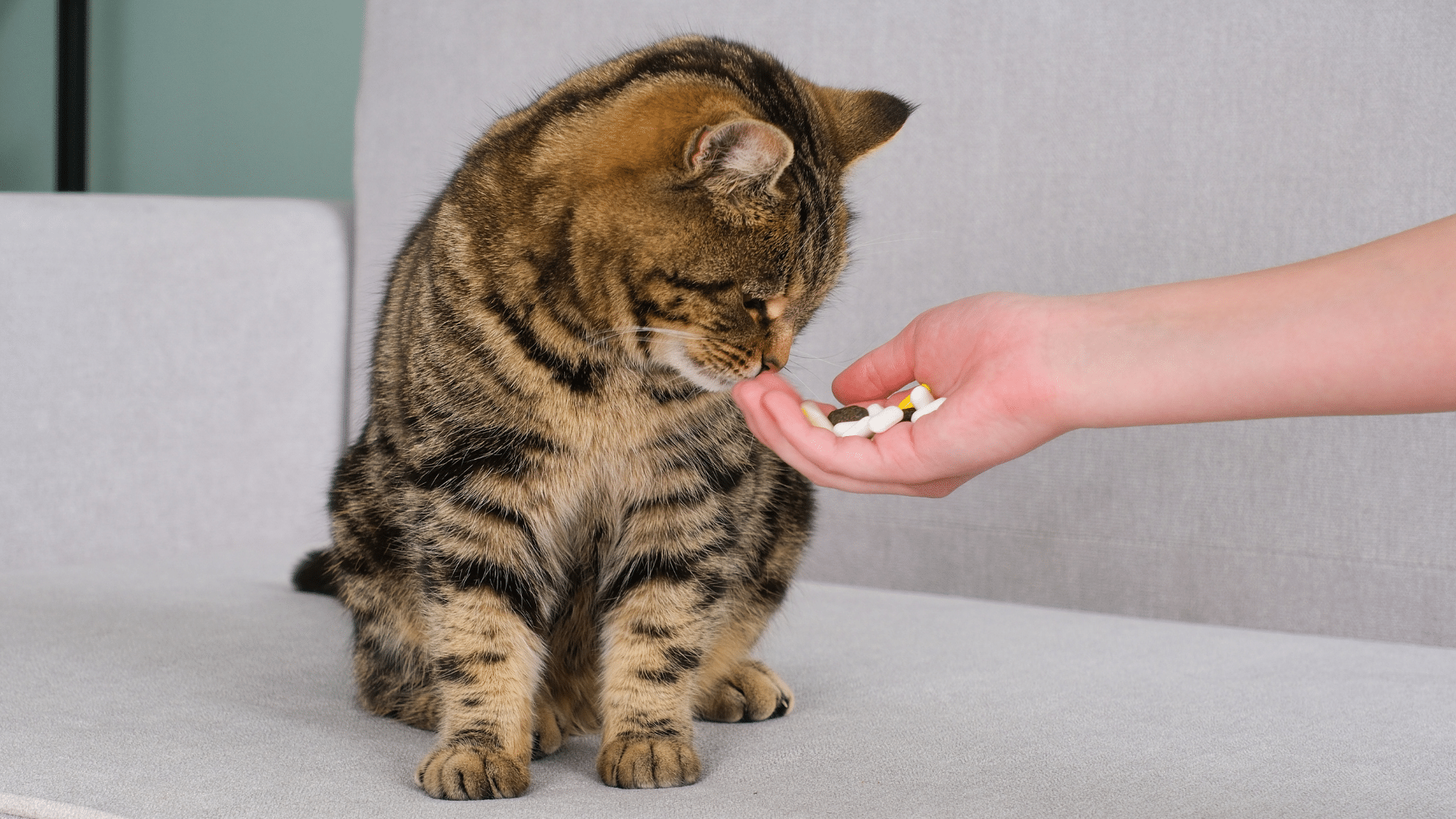
Baseline medications: A tiered approach
Selecting the right baseline medication for behavioural cases can feel complex, with multiple options, varying responses, and client expectations to manage. In this practical session, Kersti will walk you through a tiered approach to prescribing—helping you choose the best options for medication with more confidence.
-
Upcoming
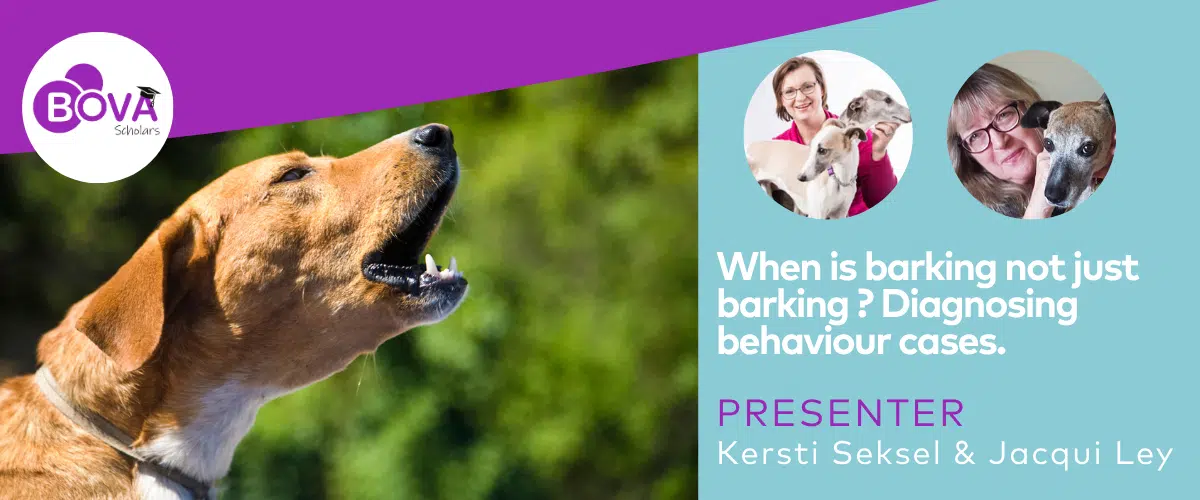
When is barking not just barking ? Diagnosing behaviour cases
One of the biggest problems with diagnosing and treating behaviour problems is working out if a behaviour is normal or a sign of a mental illness. It’s not easy as many normal behaviours can be annoying. So how do you identify who needs education and who needs a bit more help? Drawing on extensive experience in Veterinary Behavioural Medicine, we will discuss in detail how to distinguish signs of a mental illness from normal behaviour
-
Upcoming

Topical Tramadol for Ocular Pain
Ocular pain is a common yet challenging problem in ophthalmology, often inadequately controlled with current therapies such as lubricants, NSAIDs, corticosteroids, and systemic analgesics. The session will focus on the emerging role of topical tramadol, a first-in-class ocular analgesic targeting pain.

-
On-Demand
A New Approach to Managing Ocular Pain in Veterinary Practice
Veterinary ocular pain can be challenging to manage, particularly in patients with corneal ulcers, abrasions, or contraindications to systemic analgesia. This downloadable clinical guide explores current pain management challenges, practical treatment considerations, and emerging approaches to corneal analgesia in veterinary medicine.

-
On-Demand
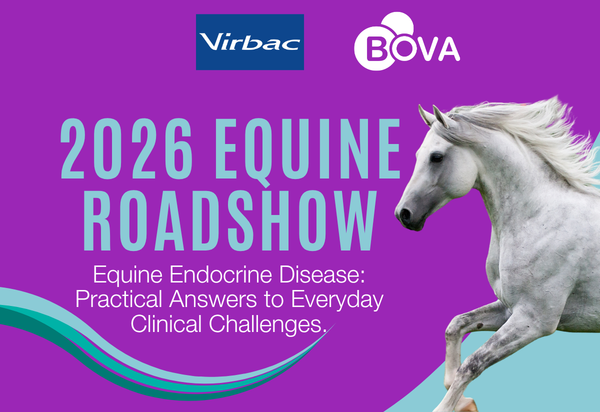
Equine Endocrine Disease: Practical Answers to Everyday Clinical Challenges | Bova Aus Equine Roadshow 2026
Led by Dr David Rendle, the session covers real-world approaches to PPID (Cushing’s disease) and Equine Metabolic Syndrome (EMS), with a focus on improving long-term outcomes and addressing common challenges such as poor owner compliance with oral medications.

-
On-Demand

Behaviour Modification | Bova Aus Equine Roadshow 2026
Originally developed for the Bova and Virbac Equine Roadshow, this webinar explores equine behaviour modification, focusing on how learned behaviours develop and how to effectively manage them in practice. It covers identifying key triggers, understanding the role of conditioning, and applying reinforcement strategies to support positive behavioural change.

-
On-Demand

Pain or Being in Pain | Bova Aus Equine Roadshow 2026
Originally developed for the Bova and Virbac Equine Roadshow, this webinar explores the complex intersection between behaviour and discomfort, challenging clinicians to ask: is this truly a behavioural issue, or a horse in pain?
-
On-Demand
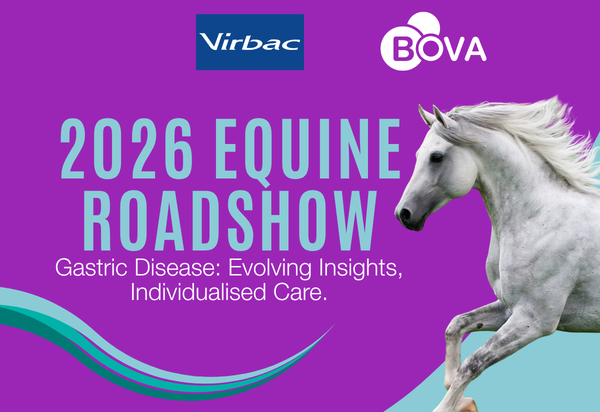
Gastric Disease: Evolving Insights, Individualised Care | Bova Aus Equine Roadshow 2026
Originally developed for the Bova and Virbac Equine Roadshow 2026, in Australia, this session sees Dr David Rendle explore the latest insights into equine gastric disease, with a focus on the differences between squamous (ESGD) and glandular (EGGD) disease.
-
On-Demand
-
On-Demand

Advances in Canine Hemangiosarcoma: From Evidence to Emerging Targets
This session provides a concise, evidence-based update on canine haemangiosarcoma, with a strong focus on contemporary treatment strategies. It includes a brief, targeted review of current literature outlining standard-of-care approaches, outcomes, and the limitations of existing therapies.

-
On-Demand

To Deworm or not to deworm? That is the question
Anthelmintic resistance is a growing threat to equine welfare, and vets play a key role in driving the behaviour changes needed. This talk reviews the latest evidence and expert consensus on sustainable equine parasite control, highlighting updated risk-based approaches from the BEVA ProtectMeToo Toolkit and CANTER Guidelines. Attendees will leave informed, motivated, and ready to champion responsible deworming – protecting equine health, welfare, and the environment.

-
On-Demand

What the drugs do – from pharmacology to practice
In this free webinar, Margie will share practical, real-world approaches to common anaesthetic and analgesic challenges, with a focus on what can be achieved, even when working with limited agents, drugs, or resources in unique clinical settings.

-
On-Demand

Advances in the management of Feline Chronic Gingivostomatitis
Discover new therapeutic approaches for Feline Chronic Gingivostomatitis, including EIDD-1931, doxycycline, and meloxicam. Join Dr Andrea Harvey.

-
On-Demand

Beyond the Prescription: What Happens When We Prescribe for Relationships, Not Just Symptoms in Behaviour Cases?
Explore how relational prescribing can transform veterinary behaviour cases. Join Dr Findy Wills to integrate medication with relationship-centred care.

-
On-Demand

A Sight for Sore Eyes: Tackling FHV-1 Ocular Disease in Cats
Join Dr James Oliver, Veterinary Ophthalmologist, for an in-depth look at ocular diseases caused by Feline Herpesvirus-1 (FHV-1). Through detailed clinical images, James will explain how to recognise, diagnose, and manage conditions such as: Corneal ulceration and conjunctivitis Symblepharon and corneal sequestrum Eosinophilic keratitis

-
On-Demand

Episode 5: Managing Difficult Cases, New Drugs, and Shorter Treatment Protocols.
What happens when first-line FIP treatment isn’t enough? Dr Sally Coggins shares 2025 insights on treating tough FIP cases—molnupiravir, paxlovid, rescue therapy, and shorter, safer treatment protocols.
-
On-Demand

Episode 4: Treating FIP in 2025: Antivirals, Dosing Updates, and Responsible Use of Antivirals.
FIP is treatable—but the real challenge? Treating it right. Dr. Sally Coggins returns to clarify what’s what in the wave of new treatment options for feline infectious peritonitis. From updated 2025 dosing protocols to practical strategies for real-world cases, this episode bridges cutting-edge evidence and everyday decision-making.
-
On-Demand

Episode 3: FIP Diagnostics in 2025: What’s Changed, What Works, and How Sure Do You Need To Be Before You Treat?
This episode brings together Dr. Sally Coggins (University of Sydney), Prof. Danielle Gunn-Moore, and Dr. Sam Taylor for a 2025 update on FIP diagnostics: what’s new, what’s practical, and how to balance certainty with urgency when a sick kitten is in front of you.
-
On-Demand

Episode 2: FIP Confusers And Unusual Presentations, with a Focus on the UK Cat Population.
In this episode, made and shared by The Vet Vault, we explore how the stakes of getting it wrong have changed now that effective treatment is available. You’ll learn how to sharpen your diagnostic edge and avoid expensive detours by recognising FIP mimics that can lead even experienced vets astray. We cover the usual suspects, as well as the rare imposters, and help you decide when it’s safe to treat empirically—and when to hit pause.
-
On-Demand

Episode 1: FIP Road Signs and Red Flags. With Prof Danielle Gunn-Moore and Dr Sam Taylor
In this episode from the Vet Vault FIP Masterclass Podcast Series, our two FIP experts break down the fast, non-invasive clues that build your clinical suspicion before jumping to invasive expensive diagnostics. You’ll learn to leverage “free” intel like signalment, weight, behavior, ocular changes – with a few pro tips thrown in for good measure – to sniff out FIP in general practice.
-
On-Demand

A disease-modifying drug for the treatment of osteoarthritis in horses
Currently available pharmacological OA treatments only improve pain or symptoms and are frequently associated with side effects. There are no approved disease-modifying osteoarthritic drugs (DMOADs) on the market yet. A DMOAD typically must show improvement in joint structure, and slow down the progression of cartilage, bone and synovium destruction, with or without an efficacy on joint pain. Therefore, molecular tools are crucial for diagnosing OA and monitoring intervention efficacy. I will talk about a new drug combination with disease-modifying properties and biomarkers for monitoring the destruction of the joint pre-and post-treatment.

-
On-Demand

Pathophysiology of Feline Chronic Gingivostomatitis and Juvenile Gingivitis, and insights into novel medical management
Feline chronic gingivostomatitis (FCGS) is one of the most frustrating and painful oral diseases seen in cats. For years, treatment options have been limited to painful full-mouth extractions or long-term steroids. But a new wave of science is offering hope—targeted antiviral therapy and innovative medical management may change the game for cats and their caregivers.
-
On-Demand

An update on treatment of FIP using antiviral drugs in 2025: growing experience but more to learn (2025)
Learn about the growing experience in treating FIP (Feline Infectious Peritonitis) with antiviral drugs in 2025 from leading specialists, offering valuable insights for veterinary professionals.















Veterinary Webinars
Free online webinars for vets and nurses to gain continued professional development (CPD). We work with a range of key opinion leaders to bring you up-to-date information on a variety of disease areas.


Veterinary Podcasts
Learn on the go with our podcasts. Delivered by key opinion leaders for the latest thinking on a variety of disease areas.

How-To Videos
Easy-to-follow videos for using our products – ideal to share with pet owners.

Veterinary Useful Resources
Invaluable resources tailored to elevate your expertise in veterinary practice. Explore our comprehensive toolkit here.