
The 45-minute webinar covers keratoconjunctivitis sicca, it is clinical presentation, diagnosis, and management. Interesting/challenging cases will also be discussed. You can join the webinar live or watch it later at your convenience.


The 45-minute webinar covers keratoconjunctivitis sicca, it is clinical presentation, diagnosis, and management. Interesting/challenging cases will also be discussed. You can join the webinar live or watch it later at your convenience.

Attendees will be cognizant of the following information by the end of the webinar:
• Horses that graze can be infected by the tapeworm, Anoplocephala perfoliata
•Equine tapeworm has an indirect lifecycle involving an oribatid/pasture mite intermediate host
• Adult tapeworms are hermaphrodite and intermittently release segments containing eggs
• The adult worms are found in caecum and, particularly, the ileo-caeco-colic junction
•Most horses have low burdens of tapeworm
• The prevalence of tapeworm varies between different groups of horses
• A main risk factor for tapeworm infection is access to pasture• Horses are infected year-round with tapeworm
• Equine tapeworm can cause colic
• The level of burden correlates with the risk of colic
• Burdens of 20 tapeworms and over have been demonstrated as pathogenic
• Serum IgG(T) levels to tapeworm excretory/secretory (ES) antigens of 12/13 kDa correlate with infection intensity
• Serum IgG(T) to 12/13 kDa ES antigens correlates with risk of colic
• Anthelmintic resistance in tapeworm to praziquantel and pyrantel was reported in 2023
• Faecal egg count tests have poor sensitivity for detecting tapeworm infection due to intermittent release of egg-containing proglottids and burdens comprising a proportion immature/sterile worms
• Serum and saliva tests that measure IgG(T) to tapeworm 12/13 kDa ES antigens can be used to diagnose infection to inform anthelmintic treatments and as an aid to diagnosis in colic cases
• Horses can be assessed in theTapeworm Blood Test 4 months after their last treatment
• Horses can be assessed in the EquiSal Tapeworm Saliva Test 3 months after their last treatment • Tapeworm antibody tests do not provide a value for exact numbers of worms but generate a score that provides a low, borderline or moderate/high tapeworm diagnosis. Treatment is recommended for horses that report a result as borderline or moderate/high
• Use of the EquiSal Tapeworm Saliva Test has led to considerable reductions in anti-tapeworm treatments in the UK, with 2 out of 3 horses tested not requiring treatment based on test results
• Control of tapeworm should combine good pasture management (low stocking density, removal of dung at least twice a week) with diagnostic testing to inform treatment decisions
• Anthelmintics licensed to treat equine tapeworm in the UK are pyrantel embonate (at twice the dose used for nematode species) and praziquantel (in combination with a macrocyclic lactone or as a single-active extemporaneous formulation that can only be prescribed by a veterinary surgeon).
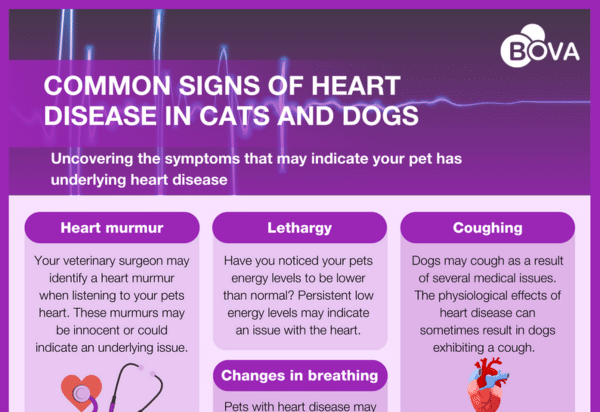
The poster discusses essential signs of heart disease in cats and dogs, such as heart murmurs, breathing changes and exercise intolerance. It offers a downloadable poster to assist pet owners in identifying these crucial symptoms, thereby safeguarding their pet’s heart health.
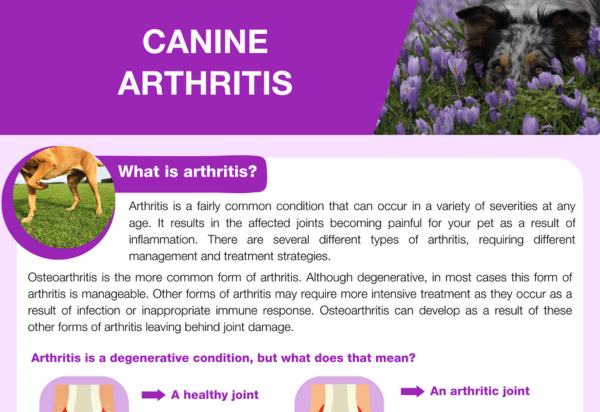
The informative poster on Canine Arthritis provides essential knowledge on the disease. It explores its causes, symptoms, treatment strategies, prevention methods, and overall management. It’s a valuable resource for pet owners seeking comprehensive understanding and practical advice for their pet’s joint health. A copy can be downloaded for reference.

Feline hyperthyroidism, the most common hormonal disease in cats affecting 10% of those aged over 9. Our comprehensive poster available for download. This reference guide explains the causes, treatments, and core symptoms of the disease to educate cat owners better and ensure timely interventions.

Dr. Sarah Caney, a specialist in feline medicine, has teamed up with Bova UK to deliver a series of webinars aiming to help cat owners identify and manage senior cat conditions. Internationally recognized, Dr. Caney, who has over 20 years of experience, intends to educate about early detection and intervention, aiming to improve the pets’ quality of life.
In the webinar, Dr. Matt Gurney, a European Veterinary Specialist, will review the use of gabapentin as an anxiolytic in cats. He will explore existing studies and provide detailed recommendations. Dr. Gurney, mainly interested in acute and chronic pain management, has extensive experience in anaesthesia and animal care.

Join an informative webinar with dermatology specialist Dr. Ariane Neuber, focusing on the use of cytology to combat antimicrobial resistance in treating ear and skin infections. Gain insights into identifying causative agents and making informed medication decisions to reduce resistance in your practice. Don’t miss this opportunity to learn from a leading expert.